


Regulations for the Storage of Vaccines
Temperatures, Equipment and Requirements in Hospitals and Pharmacies
The correct storage of vaccines is a critical factor in ensuring their efficacy, safety and stability. Vaccines are biological products that are sensitive to temperature and light, so any deviation during storage may compromise their effectiveness.
Why is the correct storage of vaccines so important?
Vaccines contain biological and chemical components that can degrade rapidly if they are exposed to incorrect temperatures. When this happens, the product may lose its effectiveness even if the vial appears to be intact.
The main risks associated with improper storage include:
• Loss of vaccine effectiveness
• Risk of administering ineffective doses
• Increased costs due to product loss
• Non-compliance with health regulations
• Impact on vaccination campaigns
For this reason, the cold chain is one of the fundamental pillars in vaccine management within the healthcare system.
Recommended temperature for vaccine storage
Most vaccines must be stored within a very specific temperature range.
Standard storage temperature: between +2 °C and +8 °C
This range is recommended by international organisations for vaccines used in routine immunisation programmes.
Some important considerations:
- Temperatures below 0 °C may damage vaccines that are sensitive to freezing (crystallisation).
- Temperatures above 8 °C may accelerate product degradation.
- Constant temperature fluctuations can also affect the product.
For this reason, healthcare facilities must use refrigeration systems specifically designed for medical use.
International regulations and guidelines on vaccine storage
Although each country may have its own specific regulations, there are widely adopted international standards.
World Health Organization (WHO)
The WHO establishes guidelines for the storage and management of vaccines within the cold chain, including requirements for equipment, temperature control and monitoring procedures.
CDC (Centers for Disease Control and Prevention)
CDC guidelines provide detailed information on:
- Proper vaccine storage
- Inventory management

- Protocols in case of temperature deviations
- Continuous monitoring requirement
European Medicines Agency (EMA)
In Europe, recommendations are aligned with Good Distribution Practices (GDP), which regulate the distribution and storage of temperature-sensitive medicines. These regulations aim to ensure that vaccines maintain their quality, safety and effectiveness from manufacturing through to administration to the patient.
Equipment required for proper vaccine storage
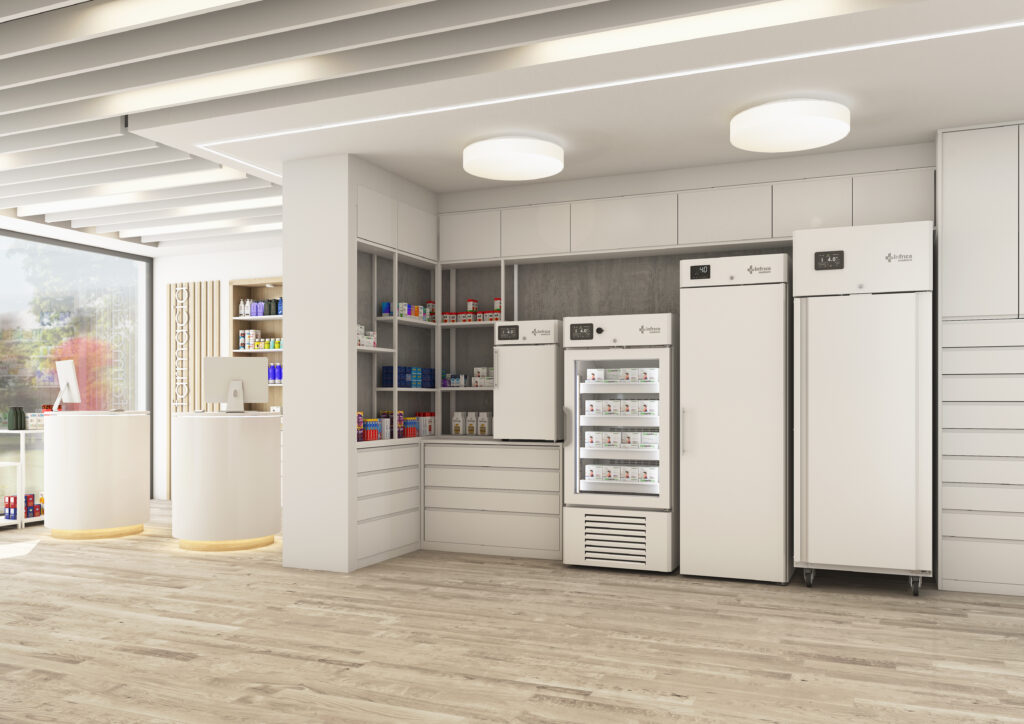
Health regulations recommend the use of medical or pharmaceutical refrigerators, specifically designed to maintain stable thermal conditions. Unlike domestic refrigerators, these units are designed to prevent temperature fluctuations and ensure uniform cold distribution.
Key features vaccine refrigerators must have
- Temperature stability
They must consistently maintain the 2 °C to 8 °C range. - Uniform cold distribution
This prevents hot spots or freezing zones inside the unit. - Alarm system
Automatic alerts should activate if temperature deviations occur.
- Continuous temperature recording
The use of data loggers or digital monitoring systems is required. - Rapid temperature recovery
The unit must be able to quickly return to the correct temperature after the door has been opened. - Compliance with medical standards
The equipment should be specifically designed for healthcare and pharmaceutical use.
Temperature monitoring and control
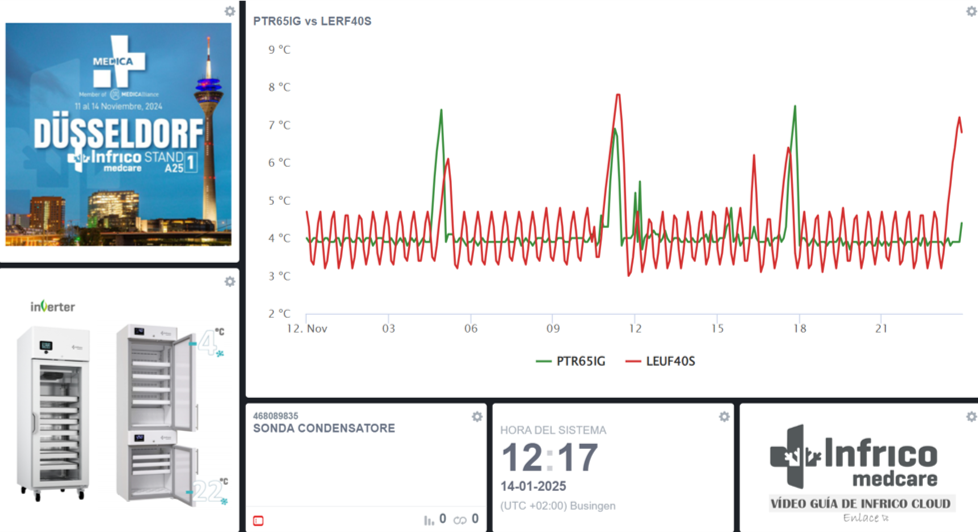
One of the most important regulatory requirements is continuous temperature control. Healthcare institutions must record the temperature of the equipment to demonstrate that vaccines have been kept within the permitted range.
Good practice includes:
- Continuous digital monitoring
- Automatic temperature records
- Periodic system checks
- Sensor calibration
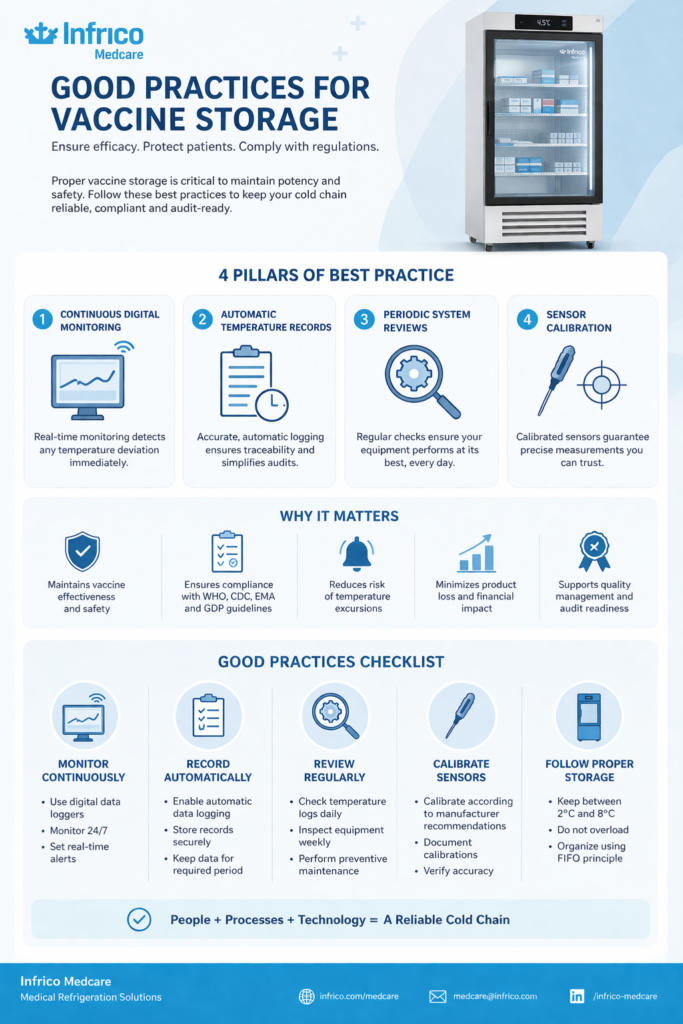
In many healthcare facilities, remote monitoring systems are used, allowing temperature deviations to be detected in real time.
Good practices for vaccine storage
In addition to having the appropriate equipment, regulations recommend implementing a series of operational procedures.
Proper organisation inside the refrigerator
Vaccines should be arranged in a way that allows adequate circulation of cold air.

Avoid:
- Placing vaccines in the door compartments
- Overloading the unit
- Blocking the air vents
Inventory control
It is recommended to use the FIFO system (First In, First Out) to prevent products from expiring before use.
Incident protocols
If a temperature deviation is detected, clear procedures should be in place to:
- Assess the stability of the product
- Isolate the affected vaccines
- Record the incident
Risks of using domestic refrigerators
One of the most common mistakes in healthcare facilities is using domestic refrigerators to store vaccines.
These units are not designed for medical use and present several problems:
- Temperature fluctuations
- Freezing zones near the evaporator

- Slow temperature recovery after the door is opened
- Lack of precise monitoring
For this reason, international guidelines recommend the use of specialised pharmaceutical refrigerators.
Conclusion
Proper vaccine storage is a fundamental requirement to ensure their effectiveness and safety. Complying with international regulations means maintaining a controlled, stable and continuously monitored cold chain at all times.
For hospitals, clinics and pharmacies, this means having appropriate medical refrigeration equipment, continuous monitoring systems, and clear storage and control protocols.
Implementing these good practices not only ensures regulatory compliance, but also protects the quality of vaccines and the health of patients.